If you’re considering switching from glasses to contact lenses, your first step is scheduling a contact lens appointment. Many patients aren’t sure what happens during this type of visit or how it differs from a regular eye exam. At Austin Optics, we make the process simple, comfortable, and personalized.
This guide walks you through everything that happens during a contact lense exam so you know exactly what to expect before your visit.
Why You Need a Contact Lens Appointment
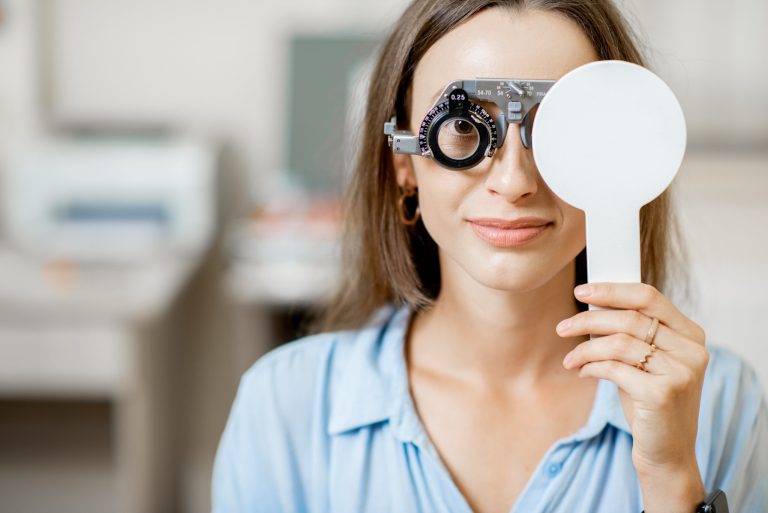
While a general eye exam determines your glasses prescription and checks your eye health, a contact lens appointment involves additional measurements, evaluations, and fittings. This is because contact lenses sit directly on the surface of your eye, which means comfort, fit, and safety depend on precise testing.
A contact lens exam ensures:
- Your lenses fit correctly
- Your corneas remain healthy
- Your tears adequately lubricate the lenses
- You receive the correct type of lens for your lifestyle
What Happens During a Contact Lens Appointment?
Every contact lens exam at Austin Optics includes a series of specialized steps designed to give you the best fit, vision, and long-term comfort.
1. Review of Your Eye Health and History
Your optometrist will begin by reviewing:
- Your previous prescriptions
- Any symptoms such as dryness or irritation
- Your vision goals
- Whether you’ve worn contact lenses before
This helps determine the best type of lens for you right from the start.
2. Updated Vision Testing
Before fitting contact lenses, your doctor will check your vision to confirm your current prescription. This ensures your new contact lenses provide the clearest and sharpest vision possible.
3. Corneal Measurements
A key part of every contact lense exam is measuring the front surface of your eye.
These measurements identify:
- Corneal curvature
- Size and shape of the eye
- Any irregularities
This allows your optometrist to choose the correct lens diameter, base curve, and material.
4. Tear Film Evaluation
Your natural tear film affects comfort and lens movement.
Your optometrist will assess:
- Tear quality
- Tear production
- Moisture stability
If dryness is present, your doctor may recommend specific types of contacts that retain moisture or suggest treatment options.
5. Trial Lens Fitting
After measurements, you’ll be given trial lenses to test.
Your optometrist evaluates how the lenses:
- Sit on the eye
- Move when you blink
- Feel after a few minutes
- Affect clarity and comfort
This step ensures your final prescription is both accurate and safe.
6. Training for First-Time Wearers
If it’s your first time wearing contact lenses, your appointment includes hands-on training.
You’ll learn how to:
- Insert lenses
- Remove lenses
- Clean and store them
- Follow proper hygiene practices
This training is essential for safe and confident daily wear.
7. Finalizing Your Contact Lens Prescription
Unlike a glasses prescription, a contact lens prescription includes details such as:
- Lens brand
- Lens material
- Power
- Base curve
- Diameter
- Replacement schedule (daily, bi-weekly, or monthly)
Your optometrist finalizes the prescription after confirming the trial lenses fit properly.
How Long Does a Contact Lens Appointment Take?
Most appointments last between 45 minutes and 1 hour, depending on your experience and whether training is required. First-time wearers may need a little extra time to practice handling the lenses.
How to Prepare for Your Contact Lens Appointment
Preparing properly ensures a smooth and efficient visit.
1. Bring Your Current Glasses
Even if you plan to switch to lenses full-time, your doctor will use your glasses for comparison and verification.
2. Bring a List of Any Eye Symptoms
Dryness, redness, or irritation can affect lens selection.
3. Remove Eye Makeup Before Your Appointment
Mascara and eyeliner can interfere with lens testing and tear evaluations.
4. Know Your Vision Goals
Your optometrist may ask what you want most from your contact lenses, such as:
- All-day comfort
- Part-time use
- Sports or fitness use
- Multifocal vision
- Astigmatism correction
When Should You Schedule a Contact Lens Follow-Up?
A follow-up appointment is often recommended after two weeks of wearing your new lenses.
During the follow-up, your doctor checks:
- Comfort level
- Lens movement
- Eye health
- Tear quality
- Prescription accuracy
Adjustments can be made if needed.
Why Choose Austin Optics for Your Contact Lens Exam?
Austin Optics provides comprehensive, accurate, and patient-centered care for all contact lens wearers. Our team uses advanced diagnostic methods to ensure the safest, most comfortable fit for each individual.
Patients choose us for:
- Detailed exams and fittings
- A wide range of lens brands and materials
- Clear, transparent guidance
- Support for first-time wearers
- Friendly, knowledgeable optometrists
Schedule Your Contact Lens Appointment at Austin Optics
Whether you’re trying contact lenses for the first time or updating your prescription, we’re here to help you get the best vision and comfort possible.
Contact Austin Optics:
Phone: +718-261-8655
Email: [email protected]
Corporate Office: Austin Optics (Forest Hills, NY)
Visit https://austinoptics.com/ to schedule your appointment today.